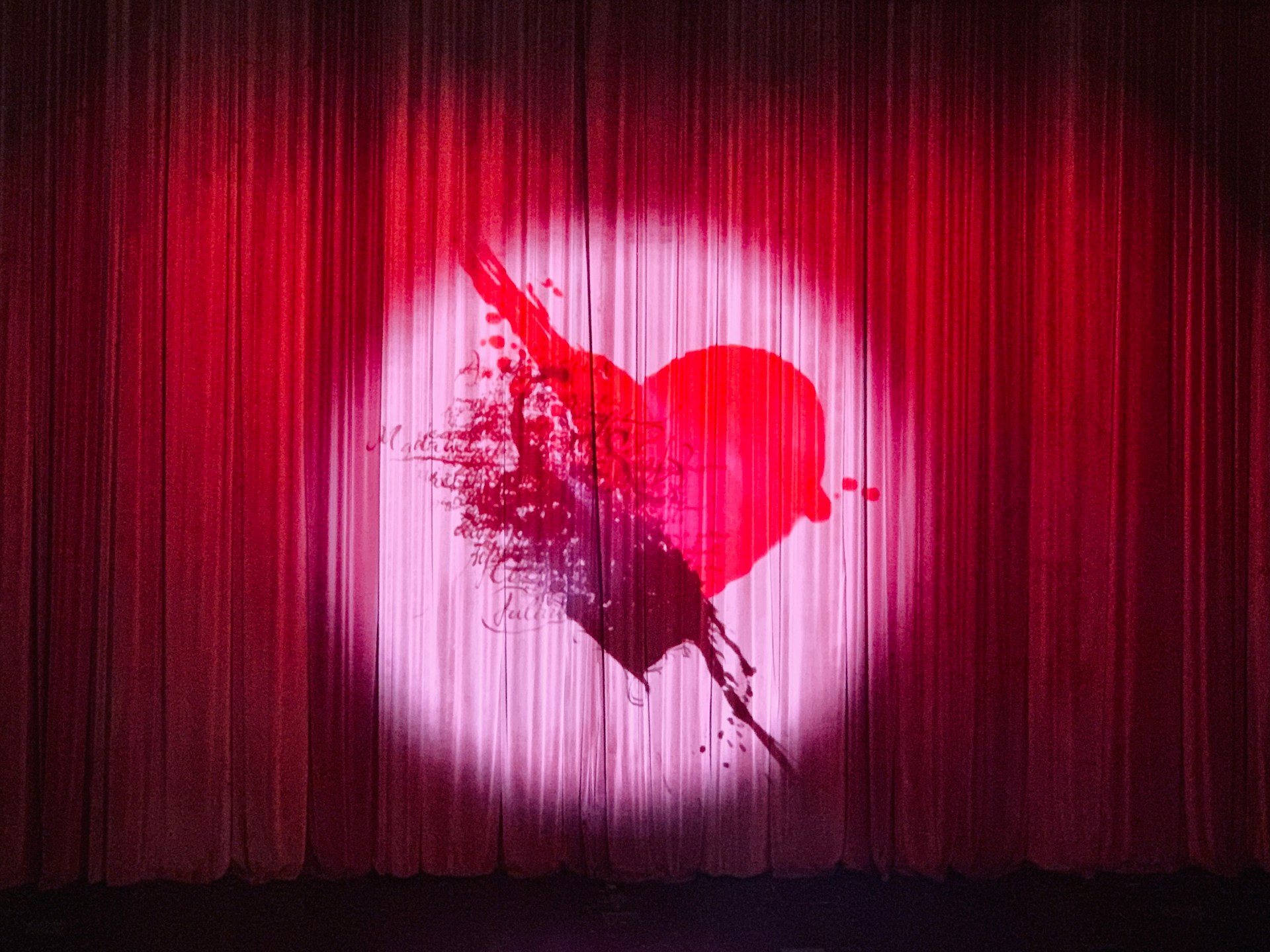
Lift your spirits and spark your creativity in this 2-hour arts-for-wellness in-person workshop celebrating Maya Angelou’s transformative poem, ‘Still I Rise’. Through reflection, lively discussion, and a hands-on art activity for you to take home, you’ll explore themes of strength, resilience, and empowerment. We hope you will leave feeling inspired and connected.
After reading and discussing Still I Rise, you will engage in a “found poetry” technique to create your own poem-within-a-poem, using markers, stickers, and other decorative materials to circle the words you find most striking and artistically obscure the rest. No prior artistic experience is needed. Just bring your curiosity and creativity!
Optional: Stay after the workshop for a pizza picnic, made by our host, Hearth & Hive, in their wood-fired pizza oven. Pizzas from $25, purchased on-site.
Workshop Fee: $65 + HST. All art supplies included. Complimentary beverages and snacks will be served!
Dr. Julie Sutherland is an award-winning educator and entrepreneur with an MA and PhD in English Literature and Modern European Languages (Durham University). She harnesses her expertise in the arts and humanities to advance social justice and personal transformation. Julie founded Art & Humanity Literary Services and Consulting in 2025, a company which exists at the intersection of language, creativity, and community wellness.
Hearth & Hive is a wood-fired micro-bakery on the Fundy coast. Products available Friday-Sunday in our bakery stand at 51 Forestdale Road in lovely Riverside-Albert. ALSO, Pizza Nights in the backyard through the summer! Friday & Saturday 4-8pm, Sunday 1-5pm
The world is at least fifty percent terrible, and that’s a conservative estimate, though I keep this from my children.
from Good Bonesby Maggie Smith
In 2017, when the poet-sensation Maggie Smith broke the Internet with her poem, “Good Bones,” the world was, according to the poem, in horrible shape. Nine years later, the situation isn’t looking dramatically better. Or better at all. Perhaps I’m looking through the wrong end of a telescope, but from where I stand, the good things are seeming even further away.
“Good Bones” uses the metaphor of a real estate agent “chirping on” optimistically about a “real shithole” to illuminate how urgently we need to sell our children on the world:
This place could be beautiful,
right? You could make this place beautiful.
While sugar-coating the truth is rarely the right course of action, it’s surely important to give young people reason to feel hopeful despite the dumpster fire we’re living through.
The concept of selling our children the world calls to mind the award-winning film La vita è bella (Life Is Beautiful). Starring Roberto Benigni, who also directed the film, it faced reasonable criticism for sentimentalizing the horrors of the Holocaust. Nevertheless, La vita è bella remains a poignant tragicomedy, revealing the extraordinary lengths to which a father will go to shield his child from the psychological impact of trauma.
How do we show the next generations that we love this place, and our place in it? Despite all the ways we sabotage our planet’s future, I know we want to leave them a healthy, peaceful world. I am struck by the American poet Matthew Olzmann, whose poem “Letter to Someone Living Fifty Years from Now” ruefully claims:
Most likely, you think we hated the elephant,
the golden toad, the thylacine and all variations
of whale harpooned or hacked into extinction.
It must seem like we sought to leave you nothing
but benzene, mercury, the stomachs
of seagulls rippled with jet fuel and plastic.
Olzmann was writing this in 2017, around the same time “Good Bones” appeared. I am not a mathematician, but when the United Nations Environment Programme estimates that between nineteen and twenty-three million tonnes of plastic waste enter aquatic ecosystems each year, even I know things are grimmer than when Olzmann penned this poem nearly a decade ago.
But, we love this place, Earth. Right? We don’t seem to be a species with much foresight, but surely we love this place. How can art remind me that not all is lost?
So many poets point the way by encouraging readers to spend time in nature, where we can come to know ourselves and our other-than-human kin.
Denise Levertov celebrates
this shimmering of wind in the blue leaves:
this flood of stillness widening the lake of sky
(Levertov, 1984)
***
Wendell Berry invites us to lie down by a still lake,
where the wood drake rests in his beauty on the water, and the great heron feeds.
(Berry, 1968)
***
Gerard Manley Hopkins reminds us of the hope of dawn, and how in nature lives
the dearest freshness deep down things; And though the last lights off the black West went Oh, morning, at the brown brink eastward, springs
(Hopkins, 1877)
***
There is no shortage of poetry selling us the world by honouring her natural elements. And, it would be absurd for me to say I don’t agree with the poets. These are poems I return to again and again, for their concise and stunning descriptions of nature’s power, mystery, beauty, and endurance.
But, as I think of things I love on a planet that we have brought to the edge of extinction, and though I feel sorrow for the way we have plundered her resources, it isn’t nature that I mourn first. After all, she will reassert herself after we are gone. She has before, as we know.
When Earth suffered a global mass extinction 60 million years ago (give or take a few million years), many forests died, food chains collapsed, and somewhere in the range of three-quarters of the world’s species went extinct. (Or so I’m told; just as I am no mathematician, I am no scientist.)
But slowly—oh so slowly—once the dust settled and the sunlight returned, plants began spreading over the barren earth. Then shrubs and trees. Eventually, mature forests developed once again. Over millions of years, novel ecosystems emerged and paved the way for humans to walk the earth.
If we evolve again, will we reproduce the uniquely creative forms of expression that characterize our species? Below are just some of the artistic and magical things that bring me glimmers of joy and expectation—enough to allow me to sell the world to our children in good conscience.
The hush of anticipation the moment before the theatre curtain rises. A collective human body holds its breath, willingly suspends its disbelief, and waits for the magic to begin.
The thunderous applause and shouts of wonder as a principal actor walks on stage after a performance to take their first bow.
The sound of the first violinist tuning the orchestra. Whether an orchestra perfectly tunes to the concertmaster is not of primary importance to me, a non-musician. I love the ritual, signalling the performance is about to begin.
Beethoven’s Moonlight Sonata. A blog on the Chicago Symphony Orchestra website refers to this composition’s “haunting resonance” and “indelible mood,” and I don’t have better words to describe it.
Judi Dench’s affecting and plaintive interpretation of “Send in the Clowns,” from Stephen Sondheim’s award-winning musical A Little Night Music.
I could go on and on. I’ve barely touched the surface. What about Cecil Beaton’s portraits? What about Oscar Wilde’s The Picture of Dorian Gray? But, I must stop somewhere, and so I draw to a close with a single moment from the 1991 film Thelma and Louise, written by Callie Khouri and directed by Ridley Scott.
When all seems lost for the movie’s intrepid antiheroes, the women don’t give up. With the top down on their 1966 Ford Thunderbird convertible, the women drive towards. Towards what, you ask? Towards agency. Towards freedom. “Let’s keep going,” Thelma says, and Louise smiles in agreement.
Bibliography
Berry, W. (1968). The peace of wild things. In Openings. Harcourt, Brace & World.
“For sweetest things turn sourest by their deeds; Lilies that fester smell far worse than weeds.” from Sonnet 94
Shakespeare’s sonnets have inspired, fascinated and disturbed readers for centuries. Full of mystery and imagination, they dazzle us even as they drive us mad: Who is the fair youth to whom so many of these sonnets are addressed? Who is the dark lady, the complex beloved of so many others? Who is the rival poet and what power does he possess? Are these lyric expressions of tortured love – among other themes – the key to understanding the mysterious life of Shakespeare, or are they not autobiographical at all?
Through close analysis and hands-on interpretive work, we will examine Shakespeare’s kaleidoscopic exploration of his speaker’s romantic and tortured feelings and experiences.
We are offering these self-contained, individual studies of Shakespeare’s sonnets in a workshop style setting. Over time we will cover a broad selection of the 154 sonnets that comprise Shakespeare’s celebrated sequence. Participants are invited to join as few or many sessions as they please.
Before the session, Julie Sutherland will send links to online versions or attach specific copies for discussion. It is highly recommended that you print these off before joining this hands-on session. If you have a printed edition, please also have it ready so we can consider variations between texts. Have a notebook and pencil on hand as well!
REDUCED COSTS: we are committed to making our studies as affordable as possible. We have a fund in place to support anyone who would like to register for a study but finds the cost difficult to afford. We can’t promise to help, but please email us at [email protected] in confidence if you would like to request a reduction in the cost of a study.
It is a commonly held notion that there is nothing we cannot buy to make ourselves feel better. From glow-in-the-dark toilet paper (Glow with the flow!) to canned unicorn meat (Tastes like rainbows and stardust!), our dampened spirits need only look to the Internet to realize that the road to happiness, health, and good fortune can be easily purchased and delivered right to our door.
Many skeptics of modern wellness culture—and I count myself among them—tend to look askance at anything marketable that promises to enhance one’s life in any material, physical, or spiritual way. It’s not that we’re scornful about wellness itself. Instead, we tend to question the reliability and authenticity of ‘purchasable health’, whether in the form of biohacking gadgets (‘Fitbits are only fit for landfill!’ the sceptics cry) or influencer-endorsed self-care products (‘Doja Cat can’t make MAC cruelty-free!’ they exclaim).
Our hearts aren’t two sizes too small. To the contrary, cynics like me celebrate evidence-based wellness-enhancing activities that are low-cost or, better yet, free. Volunteering at community events, engaging in lighthearted exercise (nothing too strenuous or expensive, naturally), and taking long, hot showers (please, no thoughts about water waste) all earn our—sometimes reluctant—approval.
My greatest tonic is learning, and there are innumerable free ways to do this, thanks to the World Wide Web—and public libraries, of course. Wellness-culture doubters like me also often embrace engaging with the arts as a legitimate source of pleasure, healing, and emotional growth. Visiting museums (especially free ones), reading novels, and listening to music are just a few examples of meaningful arts-based activities that support well-being.
All that said, there is a special brand of skeptics—and I counted myself among them—who extend their disdain for wellness culture when it trespasses on the hallowed sphere of art. Or rather, Art. When spelled with a capital A, Art comprises those books, films, plays, statues, paintings, and so on that should be taken seriously. Their aesthetic powerdemands that they be approached with reverence and a steely intellectualism.
Forgetting that the self-styled aesthete par excellence,Oscar Wilde, referenced his position in the gutter, these Art-lovers place themselves squarely in the stars. (For those who don’t venerate Oscar Wilde, as I do, I am referencing a quote from his smash-hit play from 1892, Lady Windermere’s Fan, in which Lord Darlington says, ‘We are all in the gutter, but some of us are looking at the stars’. Sound familiar? You might also know it from the British Rock band, The Pretenders, where Chrissie Hynde belted it out in ‘Message of Love’ in 1981.
Such art devotees are strongly guarded against drawing on the arts to ‘feel better’. Art therapy? [Sneer.] Thank you, no. Protesting the happiness-through-the-arts industry, these cynics reject art for wellness’ sake while dousing themselves in art for art’s sake.
Not inherently a bad thing to do. The Art for Art’s Sake movement, sometimes called Aestheticism, began in 19th-century France, but this self-consciously styled rebellion against the moral stranglehold on art and wider societal structures soon made its way to England. There, those who embraced Aestheticism roundly rejected the moralism that nailed firmly into place such enduring harms as restrictive gender norms, sexual shame and stigma, the moralization of poverty, and the equation of respectability with virtue.
To aesthetes (I still count myself among them, though with numerous rigorous qualifications and provisos), art (Art) is inherently valuable, independent of its subject matter or moral, political, ethical, or social weight. As my acting professor used to quip, You want to send a message? Call Western Union! In other words, don’t lean on art to do your heavy lifting.
So, what are my qualifications and provisos, you might ask? Chief among them is that art is indeed inherently valuable, but this doesn’t mean it can’t be drawn on for insight, learning, and—dare I say it?—healing. In this way, art exists both for its own sake and for wellness’ sake.
How might those who embrace an ‘art as therapy’ approach spend time with Art in its many forms: written, spoken, sculpted, sung, painted, or danced, to name a few? Here, I invite you to bring to mind a great masterpiece of the Italian Renaissance: Leonardo da Vinci’s enigmatic Mona Lisa.
How might I engage with this painting at the level of human emotion? To look at this masterpiece can be unsettling. The Lady Lisa's eyebrows have disappeared over the centuries (if they were ever there at all), and in such a peaceful setting, her mysteriously shifting smile seems almost sinister. What is she smiling at, and where, and at whom?
I might print (or sketch) a version of the painting and return Mona Lisa's eyebrows to her, creating a backstory to how they were lost. I might add other attributes to her face to give myself a clearer understanding of who the sitter was and what relationship she had with the painter, and now has with the viewer. Or perhaps I could add some colour that makes the background a little less serene. A little funkier. A little more something-that-speaks-to-me.
In creating a relationship with the prima donna of the art world—in giving visual form to the thoughts and emotions the painting invokes—I have grown to understand the painting’s power, but also something of myself. The choices I make, the stories I invent, and the questions I ask reveal my own ways of seeing. I have learned something about myself by reflecting on how I respond to something external to myself.
And more than that, the act of doing—of clipping papers, choosing stickers, imagining settings and stories, perceiving new landscapes, of being in relationship with great art—may itself be healing. The value lies not only in what I discover but in the process of discovery. Perhaps by exploring the mysteries of the Mona Lisa—and my response to them—I can come to understand myself a little better. I might emerge from the work feeling braver. Bolder. Ready to face the world.
Heaven forbid! cry le Club d' Art for Art’s Sake. You’ve missed thepoint!The full benefits of the Mona Lisa can only be experienced by the educated elite. (For the thousands of ‘humble' tourists queued up to view this famous lady, just ignore the aesthetes’ wailing. It might get in the way of your pleasure.)
I know I sound attitudinal, but I am as much in this camp as the other, while eschewing snobbery and elitism. I feel and know about art like I feel and know about wine: I appreciate how a specific terroir shapes each vintage. How a skilled vintner takes pride in balancing vibrant acidity with structured tannins. I understand how to luxuriate in wine’s complex, layered aromas and elegant finish.
But, I refuse to speak about wine in any of these terms, and I rarely drink it with such seriousness. Instead, my general response to a mouthful of wine is, ‘That was delicious!', sometimes said while the liquid is still running down my gullet, causing a mighty slosh and slush of sound and fury somewhere in the back of my throat and then an inelegant splash of fugitive wine on the countertop or floor (or worse, the host’s white blouse).
This isn’t to say I don’t revere wine, or art. In fact, both have the capacity to move me from the mundane to the sublime.
What do I mean by the sublime? The sublime is the emotional or spiritual experience of encountering something so vast, powerful, or beautiful that it lifts us beyond the ordinary and fills us with awe, wonder, and sometimes even terror. These feelings would be overwhelming if we physically inhabited the worlds art presents—if we were drowning in Bruegel the Elder's Storm at Sea, for example, or trapped in the uncanny silence and expansive emptiness of Beckett's Waiting for Godot.
But because we experience them from a position of safety, the terror, desolation, and oppression they evoke become, paradoxically, sources of pleasure.
To consider this further, let’s take Samuel Taylor Coleridge’s poem, The Rime of the Ancient Mariner (1834 edition). The ‘story’ isn’t important for this exercise. The imagery on its own brings the reader an experience of the sublime. Below are the lines the Ancient Mariner speaks when he meets a spectral woman who wins his soul. Read them out loud, if you can.
The western wave was all a-flame. The day was well nigh done! Almost upon the western wave Rested the broad bright Sun; When that strange shape drove suddenly Betwixt us and the Sun.
And straight the Sun was flecked with bars, (Heaven's Mother send us grace!) As if through a dungeon-grate he peered With broad and burning face.
Alas! (thought I, and my heart beat loud) How fast she nears and nears! Are those her sails that glance in the Sun, Like restless gossameres?
Are those her ribs through which the Sun Did peer, as through a grate? And is that Woman all her crew? Is that a DEATH? and are there two? Is DEATH that woman's mate?
Her lips were red, her looks were free, Her locks were yellow as gold: Her skin was as white as leprosy, The Night-mare LIFE-IN-DEATH was she, Who thicks man's blood with cold.
My physical self doesn’t want to get anywhere close to that wild sea and otherworldly woman. Yet, from the safe space of my reading chair (named Sybil, for those who want to know), I drown myself in the atmosphere the poetry evokes. I experience again and again the delicious terror of the sailor's ghastly visitor, surrounded by a sea of flame. Reading it does me great good.
What do I mean by ‘does me great good’? Imagine that every work of art came with a nutrition label, much like the ones found on food packaging. Instead of listing calories, protein, or fibre, the label would indicate the emotional and spiritual nourishment the work provides, along with the percentage of our recommended daily allowance (RDA) of various experiences. By way of example, here is what a day spent absorbing Coleridge’s haunting, hallucinatory poem might provide:
These are nutritional benefits I can digest. If art stuns me with its greatness, beauty and power; if it lifts me beyond my daily concerns; if it fills me with exhilaration or, conversely, a reflective sadness; or if it leaves me with a sense of itself being beyond comprehension, it has done some great things. Might I even say (ahem), it has contributed to my wellness?
And this is the point I have been aiming to make all along, and the one I want to invite us all to ponder: art, even when appreciated for its inherent value, has a healing power.
I offer a second invitation: Please consider joining one or both of Art & Humanity's September events. The first, on Sept. 13, is a workshop entitled Broken is Beautiful. This event is for those in the ‘Mona Lisa for Wellness’ camp. The second, on Sept. 27, is a lecture—The Poetics of Failure. This lively talk is aimed at those in the ‘art for art's sake’ camp (but be warned: it may still have a healing power). Information about each event and the links to register are at the top of this newsletter, but you can also click on the hot pink text in this paragraph.
I close this reflection not with the roaring sublime of the Rime of the Ancient Mariner, but rather with the silent, still sublime of Wordsworth’s The Prelude, which describes the speaker's experience while hiking through the Alps:
… when the light of sense Goes out, but with a flash that has revealed The invisible world, doth greatness make abode, There harbours; whether we be young or old, Our destiny, our being’s heart and home, Is with infinitude, and only there; With hope it is, hope that can never die, Effort, and expectation, and desire, And something evermore about to be.
See you in September. In the meantime, seek out some art, for wellness' sake!
For centuries, critics have debated the identity of Shakespeare’s poetic rival, depicted in the sonnets as a celebrated writer competing for the equally mysterious Fair Youth’s patronage and affection. Leading candidates include Christopher Marlowe, George Chapman and Edmund Spenser, though he may represent a composite of rivals. He vanishes from the sonnets as abruptly as he appears. In this twelfth standalone session, we’ll examine two of the nine “rival poet” sonnets alongside an earlier sonnet addressed directly to the beloved.
The sonnets have always inspired, fascinated and disturbed readers. Are these lyric expressions of tortured love – among other themes – the key to understanding the mysterious life of Shakespeare, or are they not autobiographical at all?
Through close analysis and hands-on interpretive work, we will examine Shakespeare’s kaleidoscopic exploration of his speaker’s romantic and tortured feelings and experiences.
JOINING DETAILS:
Single two-hour meeting led by Dr Julie Sutherland on Zoom
Wednesday 24 June 2026, 5.00 – 7.00 pm (BST)
Session #12 – Sonnets 79, 86 and 87
£30.00 for two-hour study
We are offering these self-contained, individual studies of Shakespeare’s sonnets in a workshop style setting. Over time we will cover a broad selection of the 154 sonnets that comprise Shakespeare’s celebrated sequence. Participants are invited to join as few or many sessions as they please.
Before the session, Julie Sutherland will send links to online versions or attach specific copies for discussion. It is highly recommended that you print these off before joining this hands-on session. If you have a printed edition, please also have it ready so we can consider variations between texts. Have a notebook and pencil on hand as well!
REDUCED COSTS: we are committed to making our studies as affordable as possible. We have a fund in place to support anyone who would like to register for a study but finds the cost difficult to afford. We can’t promise to help, but please email us at [email protected] in confidence if you would like to request a reduction in the cost of a study.
The second workshop in the ‘art of poetry’ series. Workshops are à la carte: attend one or many!
All things counter, original, spare, strange;
Whatever is fickle, freckled (who knows how?)
With swift, slow; sweet, sour; adazzle, dim...
-Gerard Manley Hopkins
Celebrate the “fickle and freckled”—the radiant imperfections that make us human—in this reflective poetry and therapeutic arts workshop. Immersing ourselves in the vivid poetry of Dorianne Laux, we’ll explore creative expression and the mottled beauty in ourselves and the world around us.
Participants will engage in creative reading and discussion, followed by a hands-on art project inspired by kintsugi, the Japanese tradition of repairing broken objects with gold to honour imperfection and resilience. Each participant will receive select supplies by post. No prior experience in literature or art is required.
About Dorianne Laux
Pulitzer Prize finalist Dorianne Laux (b. 1952) is an American poet whose vibrant free verse
explores memory, labour, love, and resilience, bearing witness to the beauty in the mundane.
A Pulitzer Prize finalist, she is widely praised for collections such as
Facts About the Moon and Only as the Day Is Long.
Sun. Sept. 13, 1-3 ET Fee: CA$110, includes select supplies, shipping, and taxes (Approx. USD$80, final exchange rate determined at point of sale)
Your hosts: Janet Minichiello is a graduate of Brown University (BA, Visual Arts and Italian Studies) and The George Washington University (MA, Art Therapy). She is a Washington, DC-based art therapist and former bookseller who spends her free time ensconced in various literary clubs and workshops.
Julie Sutherland is an award-winning educator and entrepreneur with an MA and PhD in English Literature and Modern European Languages (Durham University). A specialist in Transformative Humanities, Dr. Sutherland harnesses her expertise to advance individual and community wellness.
The Art of Poetry Series Poetry meets visual art in this creative series led by experts in the humanities and arts. In each session, participants explore a poem through creative reading, insightful discussion, and personal writing before giving it new life through a hands-on art project. No experience needed: just curiosity and a playful spirit!
How does art help us rewrite meaning in the face of fear and profound disappointment? This standalone second lecture in The Case for Unhappiness lecture series examines failure as a defining artistic question of the twentieth century, exploring how it becomes a lens for imagining possible futures when conventional notions of success have lost their force.
Focusing primarily on mid-century drama and its anti-heroes—figures marked by stalled lives and broken ambitions—we trace how art responds to a world shaped by war, totalitarianism, economic collapse, and social dislocation. At its core, the lecture asks how failure can be transformed from a deficit into a generative condition of meaning, one that continues to shape how we reckon with human worth.
Designed for curious minds, no prior knowledge of the topic or texts is required.
Select Pieces
Waiting for Godot (Samuel Beckett) Death of a Salesman (Arthur Miller) A Raisin in the Sun (Lorraine Hansberry)
Lecture Format
Each 90-minute session is delivered online, beginning with a 50-minute lecture followed by a 30-minute Q&A, moderated by an expert facilitator. Attendees’ microphones and cameras remain off during the lecture but are encouraged during the Q&A.
About the Lecturer
Dr. Julie Sutherland is a lecturer and published author with 25 years of experience researching and teaching the humanities and nearly a decade of experience in transformative humanities. She holds an MA and PhD in English Studies and Modern European Languages from the University of Durham (UK), and a BA (Honours) degree in English and Drama. Dr. Sutherland draws on her lived experience at the intersection of oppression and privilege to explore the complex, often overlooked dimensions of ‘reading for well-being’, speaking on the topic internationally. An award-winning educator and entrepreneur, she is also recognized for her contributions to anti-racism initiatives.
About the Moderator
Dr. John Allemand is a psychoanalytic psychotherapist and consultant in private practice in Seattle, Washington. A Clinical Instructor in the University of Washington’s Department of Psychiatry and Behavioral Sciences, his theoretical and clinical interests include British Object Relations theory and archetypal psychology, but his real passion is the psychoanalytic study of art, literature and film. His doctoral dissertation was a psychoanalytic study of the films of Pedro Almodovar. Dr. Allemand taught university-level literature for ten years before being lured away by Freud and Jung, but he continues to draw heavily on literature as a means of tending the unconscious in his clinical work.
The Series
The Case for Unhappiness: Arts Against the Tyranny of Positivity
Lectures for curious minds
The Case for Unhappiness explores why art so persistently returns to suffering, failure, and dissatisfaction—and what these experiences reveal about meaning, value, and the human condition. Challenging the assumption that happiness, success, and emotional comfort are the highest goods, the lectures examine how literature, music, dance, and visual art confront pain not as something to be resolved, but as something to be understood. Drawing on aesthetic theory, philosophy, literary studies, and cultural history, The Case for Unhappiness invites participants to reconsider what art teaches us about living well in a world marked by loss, limitation, and moral pressure.
Art & Humanity is partnering with BIBLIOMUSES to reoffer Poetry of the Senses, a meditative haiku workshop exploring sight, taste, touch, smell, and sound.
Includes works by Mary Oliver,Matsuo Bashō,Over the Rhine, John Singer Sargent & more. No experience needed!
The cost is from €30 (see event details for approximate price in CAD). For more info and registration, email [email protected]
Not so very long ago, when the lands where I live were encased in ice and the branches of all the deciduous trees were bare, I spotted three bright green leaves atop a pile of snow. I was amazed. I don’t believe in signs or miracles, but I want to believe in magic, and it felt as though some Faerie Realm—overlaid on our world and often obscured—was shimmering through.
Trees always possess some magic, even when they are unadorned. When they burst into a riot of innumerable greens, the spirit, dampened by snow mould, starts to flutter and unfurl. Nowhere is this more true than in wintry climates where the days grow long well before the temperatures climb above freezing.
Growing up in British Columbia, I know more about coniferous trees than deciduous ones. The forests of my childhood were made up of Douglas-Firs, Red Cedars, and Western Hemlocks. When I first moved to Ontario as a university student, I was captivated by the colours of the region’s sugar maples and red oaks, but I longed for the silvery blue shades, prehistoric ferns, and immense trunks of my home province.
I was many years into adulthood before I understood that the woods of everywhere else weren’t puny. It was rather that the forests of the West Coast boasted some of the largest, tallest trees on the planet.
That these trees are under threat is no secret, but it is something to continue to hammer home—which brings me back to my opening story.
It turns out the mysterious leaves were not, after all, from a Faerie Realm. Indeed, they were not even leaves. At least, not real ones. To my dismay, they were polyester. Instead of nourishing the earth, they were contributing to its decay. Pure rubbish masquerading as organic life.
So much that glistens green carries the seed of ruin. Those polyester leaves are a tiny part of a bigger picture of manufacturing processes that consume stupendous amounts of energy and emit greenhouse gases, producing plastics that can take decades to decompose. We are choking the earth with our waste.
American poet Matthew Olzmann contemplates what we are leaving future generations in his poem, 'Letter to Someone Living Fifty Years from Now':
It must seem like we sought to leave you nothing but benzene, mercury, the stomachs of seagulls rippled with jet fuel and plastic.
Ours isn’t the first global climate disruption, but it is the fastest and the most human-driven—and it could be the last one our species will see. Humans have been bungling the health of the land for some time, of course, but until the Industrial Revolution, most human activity affected local or regional environments.
In the late sixteenth century, for example, England and Scotland were struck with a series of environmental catastrophes directly linked to human activity: natural resources were being extracted intensively as landscapes were increasingly plundered to meet the people's growing demands. As a result, famine devastated the population while disease spread rapidly, driving death rates to alarming levels.
By 1603, as the House of Tudor gave over to the House of Stuart, London was showing signs of what we would now recognize as environmental degradation: polluted air, mismanaged land and waterways, and mounting pressure from rapid urban growth. The capital’s voracious appetite for resources reshaped the country, exploiting forests, fields, and waterways far beyond the city itself.
Shakespeare gives voice to these environmental crises in A Midsummer Night’s Dream. In her rebuke of the Fairy King Oberon, the formidable Fairy Queen Titania describes a deep climatological disorder: the air grown thick and unwholesome, floods overtaking the fields, livestock wasting, the seasons wandering off course, and sickness rising among humans as the natural world falls out of tune. Read it out loud, if you can:
Therefore the winds, piping to us in vain, As in revenge have sucked up from the sea Contagious fogs, which, falling in the land, Hath every pelting river made so proud That they have overborne their continents. The ox hath therefore stretched his yoke in vain, The plowman lost his sweat, and the green corn Hath rotted ere his youth attained a beard. The fold stands empty in the drownèd field, And crows are fatted with the murrain flock. The nine-men’s-morris is filled up with mud, And the quaint mazes in the wanton green, For lack of tread, are undistinguishable. The human mortals want their winter here. No night is now with hymn or carol blessed. Therefore the moon, the governess of floods, Pale in her anger, washes all the air, That rheumatic diseases do abound. And thorough this distemperature we see The seasons alter: hoary-headed frosts Fall in the fresh lap of the crimson rose, And on old Hiems’ thin and icy crown An odorous chaplet of sweet summer buds Is, as in mockery, set. The spring, the summer, The childing autumn, angry winter, change Their wonted liveries, and the mazèd world By their increase now knows not which is which. (Act 2, Sc. 1)
What is more, Titania takes responsibility for the crisis, attributing it to the discord between herself and Oberon:
this same progeny of evils comes From our debate, from our dissension; We are their parents and original. (Act 2, Sc. 1)
If only we were all so self-aware.
Of course, so often the least mindful are also the least perturbed. We must remind ourselves as concerned citizens that we can only do so much at the individual and community levels. Massive investments by fossil fuel companies are driving plastic production to alarming heights, creating a persistent environmental threat.
We are David and Goliath is armed to the teeth.
I often feel helpless or hopeless, or both at once. As usual, I turn to literature and other arts to help me process my climate grief and anxiety. They remind me that Mother Earth is a generous and forgiving teacher. They encourage me that I can’t single-handedly save the planet, but I can 'read softly' (to borrow from The Tempest) so as to leave the smallest possible trace—or, as Caliban says in the same play, so that 'the blind mole may not / Hear a foot fall'.
One masterpiece in which I have found comfort and inspiration is The Overstory by American author, Richard Powers. This potent work of activism is also a passionate novel that pays tribute to the grandeur of the natural world.
Powers tells us, for example, that a half-millennium-old Douglas-fir will
send its storehouse of chemicals back down into its roots and out through its fungal partners, donating its riches to the community pool in a last will and testament.
Powers calls these 'ancient benefactors giving trees'.
And this, to me, is what makes a forest enchanted. When compared with human greed, the generosity of our forest kin (I’m told we share some DNA with trees) is nothing short of magical.
Not only do trees give to their own, they also give to us—a fact illustrated in Shel Silverstein's poignant story, The Giving Tree, about a boy whose fickle love for a tree is met with the tree’s unconditional love for the boy. The tree gives without ceasing for decades until all that is visibly left of him is the lowest part of his trunk.
‘I don’t need very much now’, said the boy, ‘just a quiet place to sit and rest. I am very tired’. ‘Well’, said the tree, straightening herself up as much as she could, ‘well, an old stump is good for sitting and resting. Come, Boy, sit down. Sit down and rest’. And the boy did. And the tree was happy.
There is so much we can learn from trees. Generosity, for one, as Silverstein's giving tree teaches us. Trees also model good will, though this is not the lesson Richard Powers intended in his passage below, where he frames the interaction between trees and humans as a bribe:
Trees know when we’re close by. The chemistry of their roots and the perfumes their leaves pump out change when we’re near. … When you feel good after a walk in the woods, it may be that certain species are bribing you.
I like to think that the relationship is a little more nuanced than a harshly transactional bribe. Perhaps we can view it as a reciprocal support system—a quid pro quo. When you're good to Mama (when you move respectfully and lovingly through her lands), Mama's good to you.
We can also learn loving stewardship from trees. The German forest scientist, Peter Wohlleben, tells us that
the trees in a forest care for each other, sometimes even going so far as to nourish the stump of a felled tree for centuries after it was cut down by feeding it sugars and other nutrients, and so keeping it alive.
Love and care also pulse through the animated short film, Forevergreen. This Oscar-nominated movie is about an orphaned bear cub who forges a friendship with a loving tree. If it sounds anthropomorphic, it is. Forevergreen is part allegory, I think, and the bear is a stand-in for us.
The film’s soundscape is wordless, yet the final frame seizes our attention with a text, from the bible of all places:
Greater love has no one than this, that one lay down his life for his friend.
Drop everything and watch this 13-minute film now, and then please tread softly on this blessed earth. Go for a walk in an enchanted wood and listen closely. As Powers reminds us,
Trees have long been trying to reach us. But they speak on frequencies too low for people to hear.
References
Olzmann, M. (2017). Letter to Someone Living Fifty Years from Now. Academy of American Poets. https://poets.org/poem/letter-someone-living-fifty-years-now
Shakespeare, W. (n.d.). A Midsummer Night’s Dream, Act 2, scene 1. Folger Shakespeare Library. Retrieved March 18, 2026, from https://www.folger.edu/explore/shakespeares-works/a-midsummer-nights-dream/read/2/1/
Shakespeare, W. (n.d.). The Tempest. Folger Shakespeare Library. Retrieved March 20, 2026, from https://www.folger.edu/explore/shakespeares-works/the-tempest/read/
Silverstein, S. (1964). The giving tree. HarperCollins.
Wohlleben, P. (2017). The hidden life of trees: What they feel, how they communicate – discoveries from a secret world (J. Billinghurst, Trans.). David Suzuki Institute.
That time of year thou mayst in me behold When yellow leaves, or none, or few, do hang Upon those boughs which shake against the cold, Bare ruin'd choirs, where late the sweet birds sang. – from Sonnet 73
Shakespeare’s sonnets have inspired, fascinated and disturbed readers for centuries. Full of mystery and imagination, they dazzle us even as they drive us mad: Who is the fair youth to whom so many of these sonnets are addressed? Who is the dark lady, the complex beloved of so many others? Who is the rival poet and what power does he possess? Are these lyric expressions of tortured love – among other themes – the key to understanding the mysterious life of Shakespeare, or are they not autobiographical at all?
Through close analysis and hands-on interpretive work, we will examine Shakespeare’s kaleidoscopic exploration of his speaker’s romantic and tortured feelings and experiences.
JOINING DETAILS:
Single two-hour meeting led by Dr Julie Sutherland on Zoom
Wednesday 6 May 2026, 5.00 – 7.00 pm (BST)
Session #11 – Sonnets 71, 73 and 74
£30.00 for two-hour study
We are offering these self-contained, individual studies of Shakespeare’s sonnets in a workshop style setting. Over time we will cover a broad selection of the 154 sonnets that comprise Shakespeare’s celebrated sequence. Participants are invited to join as few or many sessions as they please.
Before the session, Julie Sutherland will send links to online versions or attach specific copies for discussion. It is highly recommended that you print these off before joining this hands-on session. If you have a printed edition, please also have it ready so we can consider variations between texts. Have a notebook and pencil on hand as well!
REDUCED COSTS: we are committed to making our studies as affordable as possible. We have a fund in place to support anyone who would like to register for a study but finds the cost difficult to afford. We can’t promise to help, but please email us at [email protected] in confidence if you would like to request a reduction in the cost of a study.